
Robins’ Natural Resources Program supports mission by managing outdoor spaces | This is Robins
From birds to bears: the Base’s Natural Resources Program is critical in mission readiness.
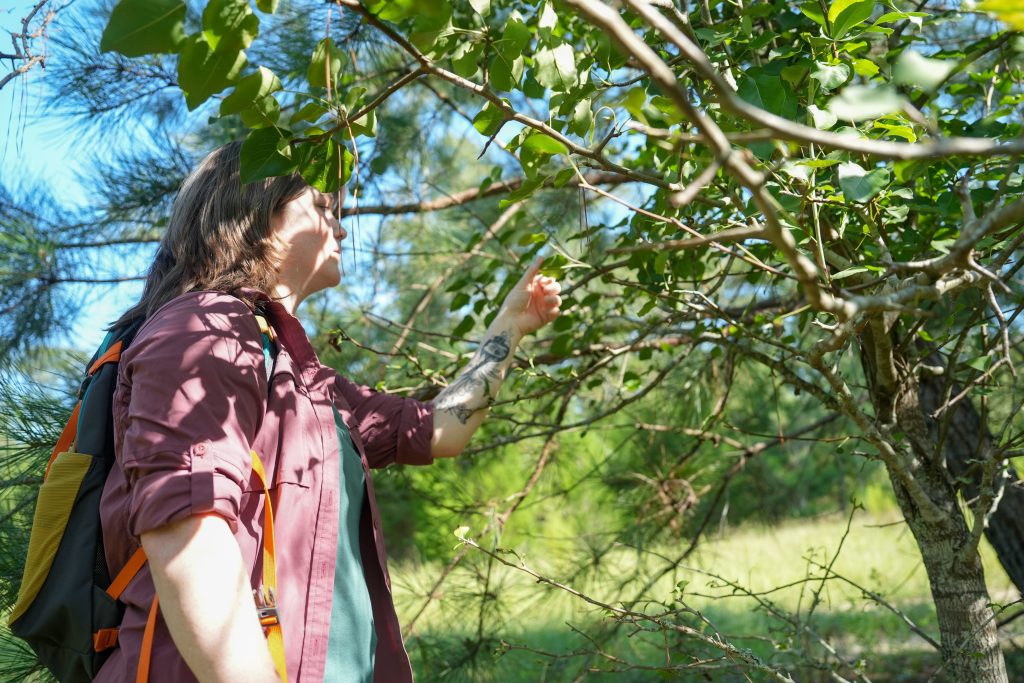
ROBINS AIR FORCE BASE — The great outdoors is the main focus of a critical department on Robins Air Force Base. The Natural Resources Program ensures mission readiness through managing natural areas on base.
Emma Browning, the Natural Resources Program’s manager, described the department as multifaceted. Wildlife surveys, landscaping recommendations, hunting and fishing regulations and conserving endangered species are the tip of the iceberg for the program.
Browning said as winter turns to spring, the department focuses on habitat restoration and removing invasive plants, enabling personnel to perform outdoor tasks and navigate more easily.
Helping endangered species is also important, according to Browning.
“It also goes hand in hand with endangered species conservation. By restoring the habitat and removing invasive species, you’re bolstering the endangered native species on base as well,” she explained.
Browning cited the Ocmulgee skullcap, a perennial plant found in Ocmulgee River watersheds. Invasive species, like English ivy, threaten the rare blooms. Other endangered species, according to the program’s website, include the American alligator, monarch butterfly and the tricolored bat.
“[The ivy] creates a carpet on the forest floor, and it’ll basically just smother out anything, and that includes, our skullcaps,” she said
As a result of these ongoing efforts, Browning noted that skullcap levels are increasing and that endangered species management supports the base’s compliance with the Endangered Species Act.
Beyond compliance and operations, Browning said, maintaining tree composition and providing outdoor spaces benefits employees seeking peace and relaxation.
“That also allows base personnel just a place to be able to explore. So that also kind of helps with mental health, because you’re providing outdoor spaces and opportunities,” she said.
Describing the department’s workflow, Browning said tasks vary by season. In winter, the team primarily handles permits and future project planning.
When summer arrives, she explained, it’s boots-on-the-ground as the department conducts surveys of species ranging from breeding birds and black bears to rare plants, alligators, and box turtles.
With over 2,000 acres of wetland habitat on base, the department spends a lot of time outdoors traveling to survey points, sometimes early, but Browning said she loves the work.
In the fall, the department is partnering with Shaw Air Force Base for a controlled burn of the base’s longleaf pine forest. The 20-acre forest requires fire to reproduce.
Browning said the burn is overdue, so the event will be crucial for the department.
“We haven’t had a burn in over 10 years, and they should be managed every three to five years. So that’ll be a big deal. We’re finally getting fire on the ground on Robins hopefully in the fall, depending on weather conditions. It’s all about weather when it comes to fire,” she said.
Browning said many on base don’t realize the department includes scientists, like wildlife biologists. Limited public access means endangered species are more likely to thrive, and biologists are essential to manage them.
Although the descriptions may differ, the department is on the same page, she said.
“Environmental is here to keep the base in compliance so that the mission can run smoothly. The mission comes first with environmental as well,” she said,
And dedication runs deep for the department.
“It supports mission readiness. They’re here to help by keeping Air Force properties in compliance,” Browning said. “Here on base, we have some really hard workers in environmental and they all do it out of passion and for the mission.”
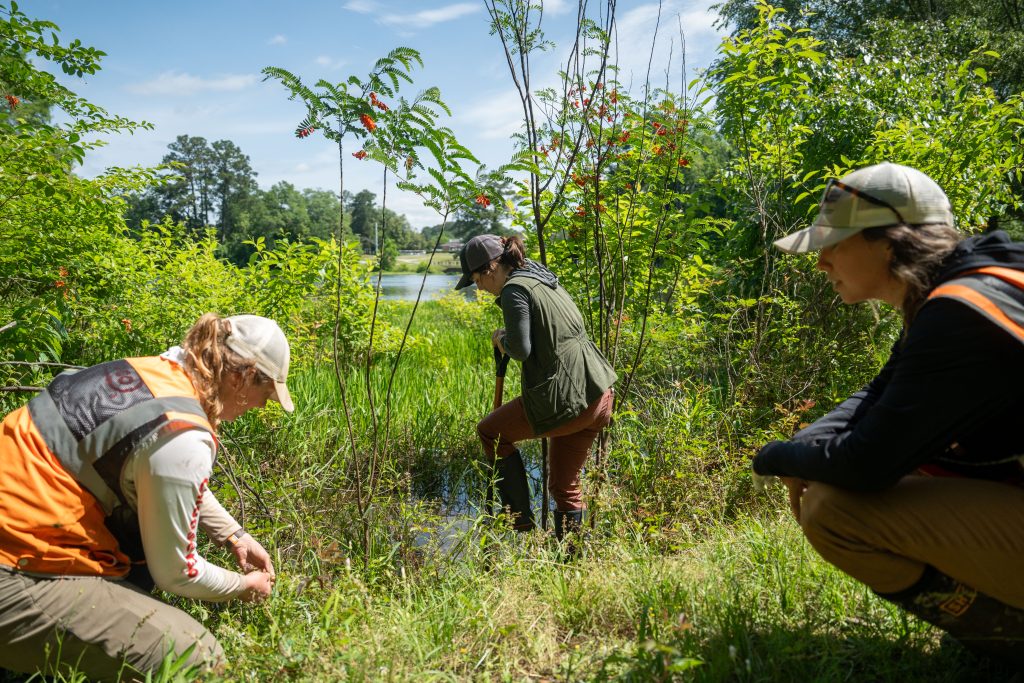
Emma Browning, 78th Civil Engineering Group natural resources manager, collects a soil sample for the installation’s wetland delineation survey at Robins Air Force Base, Georgia. This survey identifies and maps wetlands so the installation can follow environmental laws, avoid damaging protected areas, and plan construction or mission activities responsibly. (U.S. Air Force photo by C Arce)
Before you go...
Thanks for reading The Houston Home Journal — we hope this article added to your day.
For over 150 years, Houston Home Journal has been the newspaper of record for Perry, Warner Robins and Centerville. We're excited to expand our online news coverage, while maintaining our twice-weekly print newspaper.
If you like what you see, please consider becoming a member of The Houston Home Journal. We're all in this together, working for a better Warner Robins, Perry and Centerville, and we appreciate and need your support.
Please join the readers like you who help make community journalism possible by joining The Houston Home Journal. Thank you.
- Brieanna Smith, Houston Home Journal managing editor
Paid Posts
Author

Related Articles
$5 million budget increase proposed for Warner Robins. Here’s what it’s going to.
Cities statewide are preparing spending plans for fiscal year 2027, including Warner Robins.
No rate increases, vape shop regulations proposed at Perry city council meeting. Here’s what we know
Perry City Council heard the proposed FY 2027 operating budget and a new set of regulations impacting future vape shops.
Water rates and sales tax to increase in Houston County. What to know about the FY2027 budget
Houston County’s FY27 budget has increased 13%, most notably connected to rises in the water fund and sales tax.