
Move to the Back
“How many years can some people exist before they’re allowed to be free?” — Bob Dylan, “Blowing in the Wind.”
“How many years can some people exist before they’re allowed to be free?” — Bob Dylan, “Blowing in the Wind.”
Rosa Parks helped ignite the modern civil rights movement when, 90 years after Appomattox, she refused to give up her bus seat to a white man. You’ve heard that story—but it’s usually told too simply. This wasn’t about one rude passenger. It was about the law.
Montgomery’s bus policy was precise and cruel. The front 10 rows were reserved for whites. The back 10 rows for Blacks. The middle 16 rows came with rules: whites always sat in front of Blacks, and could not share a bench. If a white passenger boarded and no seat was available, Black riders were required to move farther back—again and again.
Black riders, who made up about 75 percent of the system’s passengers, paid their fares at the front, then were forced to exit and reenter through the back door. Sometimes the bus just drove away without them.
Rosa Parks had suffered that humiliation before—at the hands of driver James F. Blake. On December 1, 1955, when Blake ordered her to move, she refused. Like others before her, she was arrested. But this time there was a plan.
The boycott began the next Monday. For 381 days, Black residents walked, carpooled, and reorganized daily life. White employers picked up Black employees to keep their businesses running. Ridership collapsed. Montgomery felt it in their pocketbook. Three hundred and eighty one days later, the Supremes ruled bus segregation unconstitutional, and the boycott ended.
Rosa Parks later said she wasn’t physically tired that day—she was tired of giving in.
Being free shouldn’t be that hard.
Kelly Burke was born in Knoxville where he spent his younger years, followed by high school years in Atlanta where he graduated from Georgia Tech, and Mercer Law School. He has been in private practice, a magistrate judge, and an elected district attorney. He writes about the law, politics, music, and Ireland. He and his wife enjoy gardening, playing with their Lagotto Ramanolo named George Harrison, and spending time with their grandchildren. To see this column or Kelly’s archives, visit www.kellyrburke.com. You can email Kelly at dakellyburke@gmail.com.
Before you go...
Thanks for reading The Houston Home Journal — we hope this article added to your day.
For over 150 years, Houston Home Journal has been the newspaper of record for Perry, Warner Robins and Centerville. We're excited to expand our online news coverage, while maintaining our twice-weekly print newspaper.
If you like what you see, please consider becoming a member of The Houston Home Journal. We're all in this together, working for a better Warner Robins, Perry and Centerville, and we appreciate and need your support.
Please join the readers like you who help make community journalism possible by joining The Houston Home Journal. Thank you.
- Brieanna Smith, Houston Home Journal managing editor
Paid Posts
Author

Related Articles

Do you have a homestead exemption?
First, a correction…
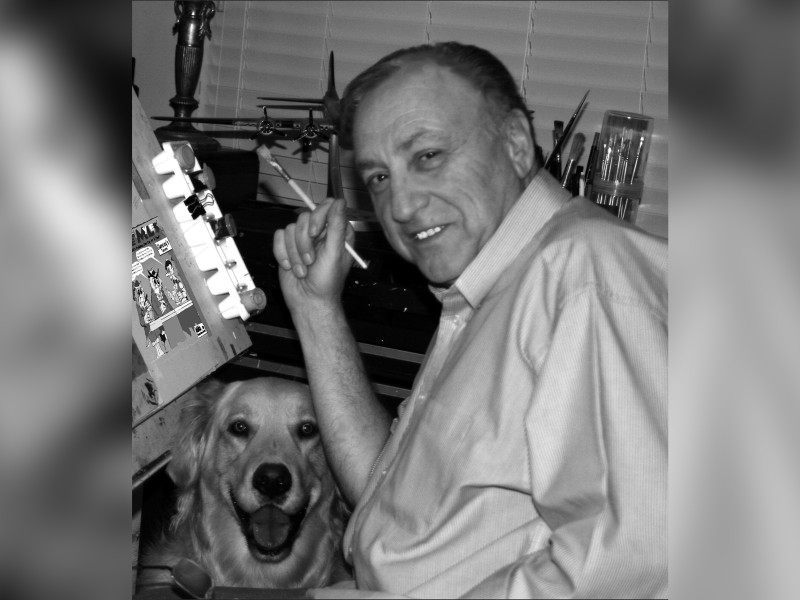
‘Toon’ In for March — Jim Balletto
March’s comics from Jim Balletto.

Just say no: A rant on weather and drugs
I have already complained about the weather enough but humor me as I do so for a little bit longer.