
Warner Robins Police, community come together for neurodivergent town hall discussion
Local law enforcement, emergency personnel, and neurodivergent families gathered for a town hall in Warner Robins to foster understanding, improve public safety response, and promote resources for neurodivergent individuals during Autism Acceptance Month.
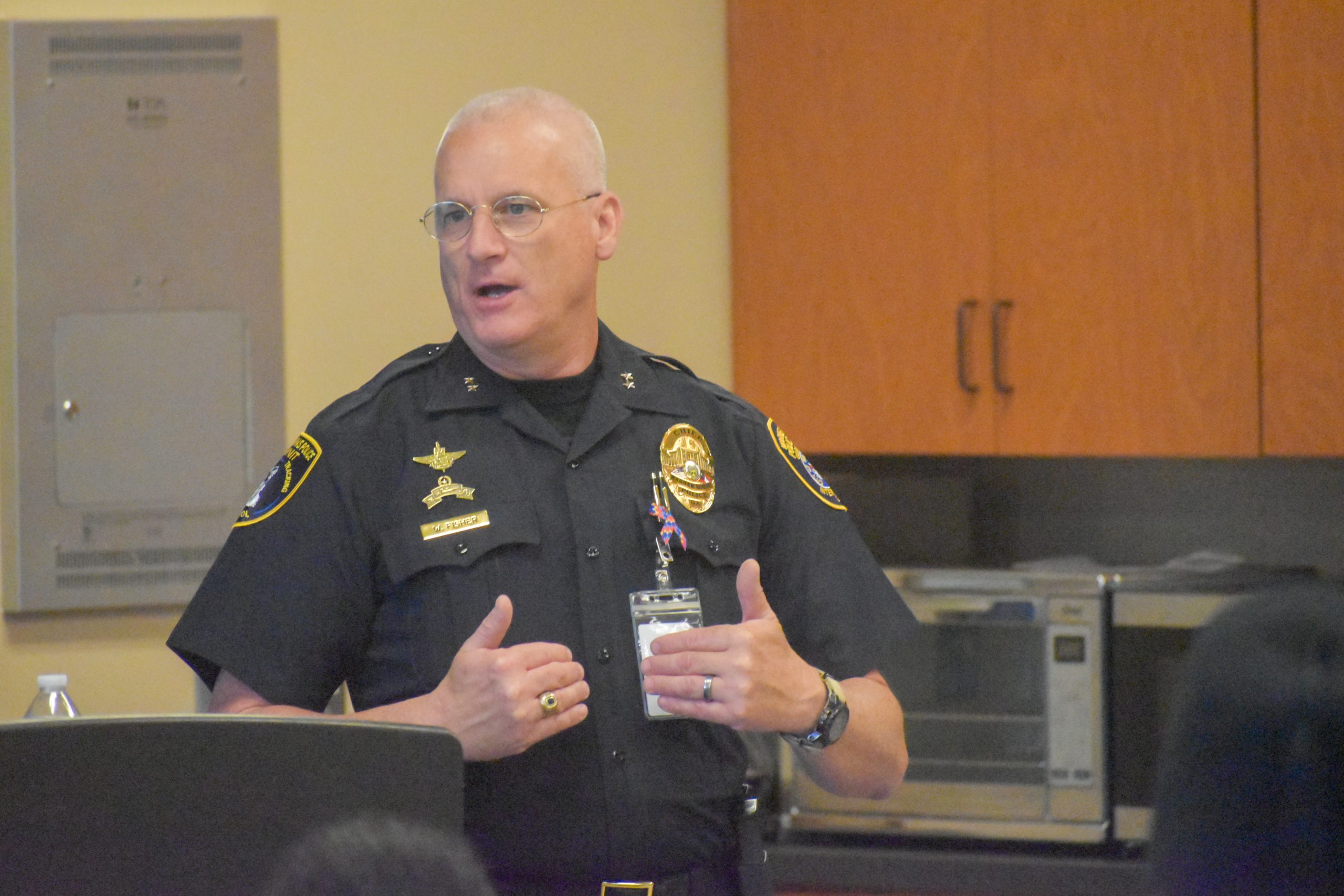
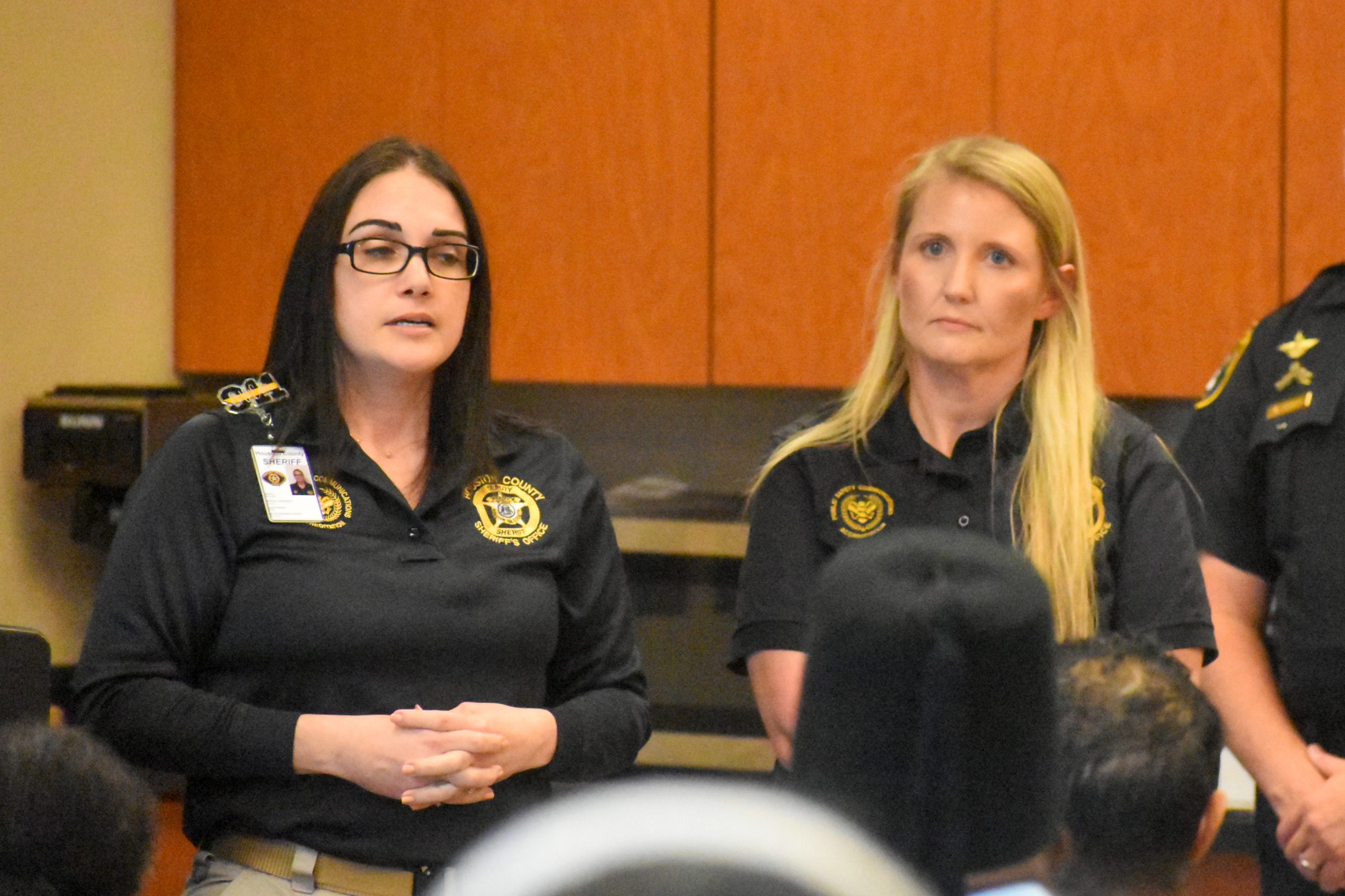
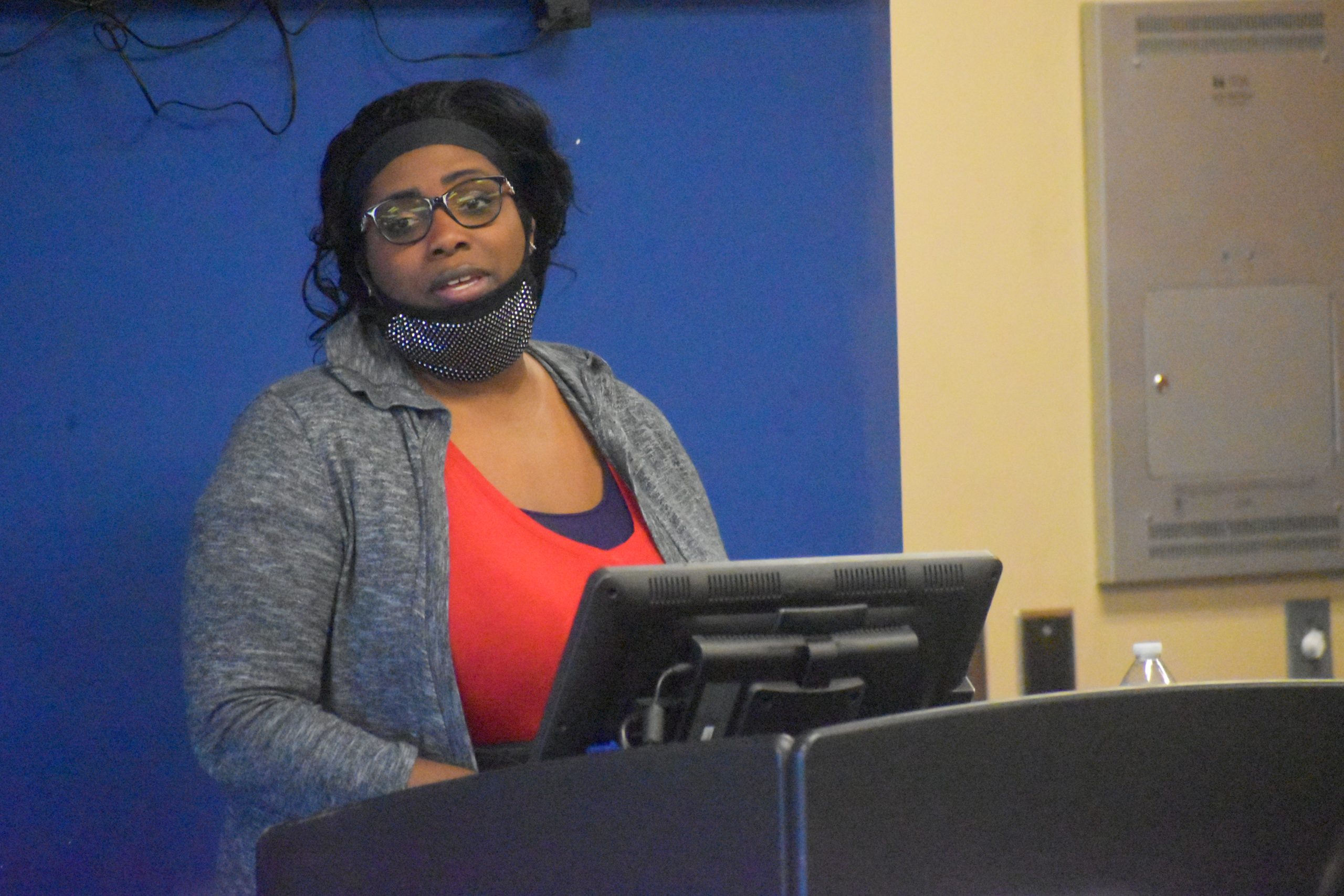
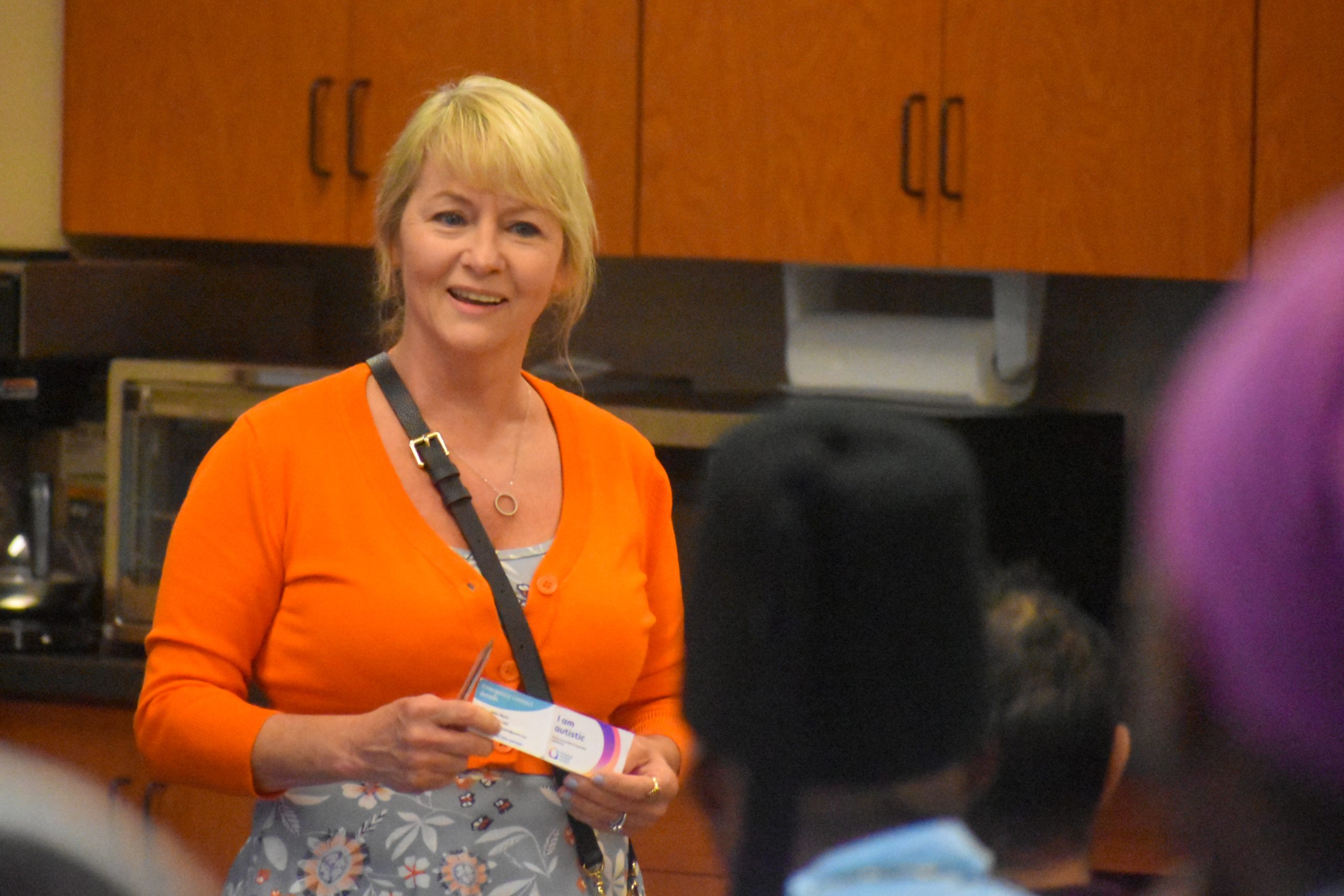
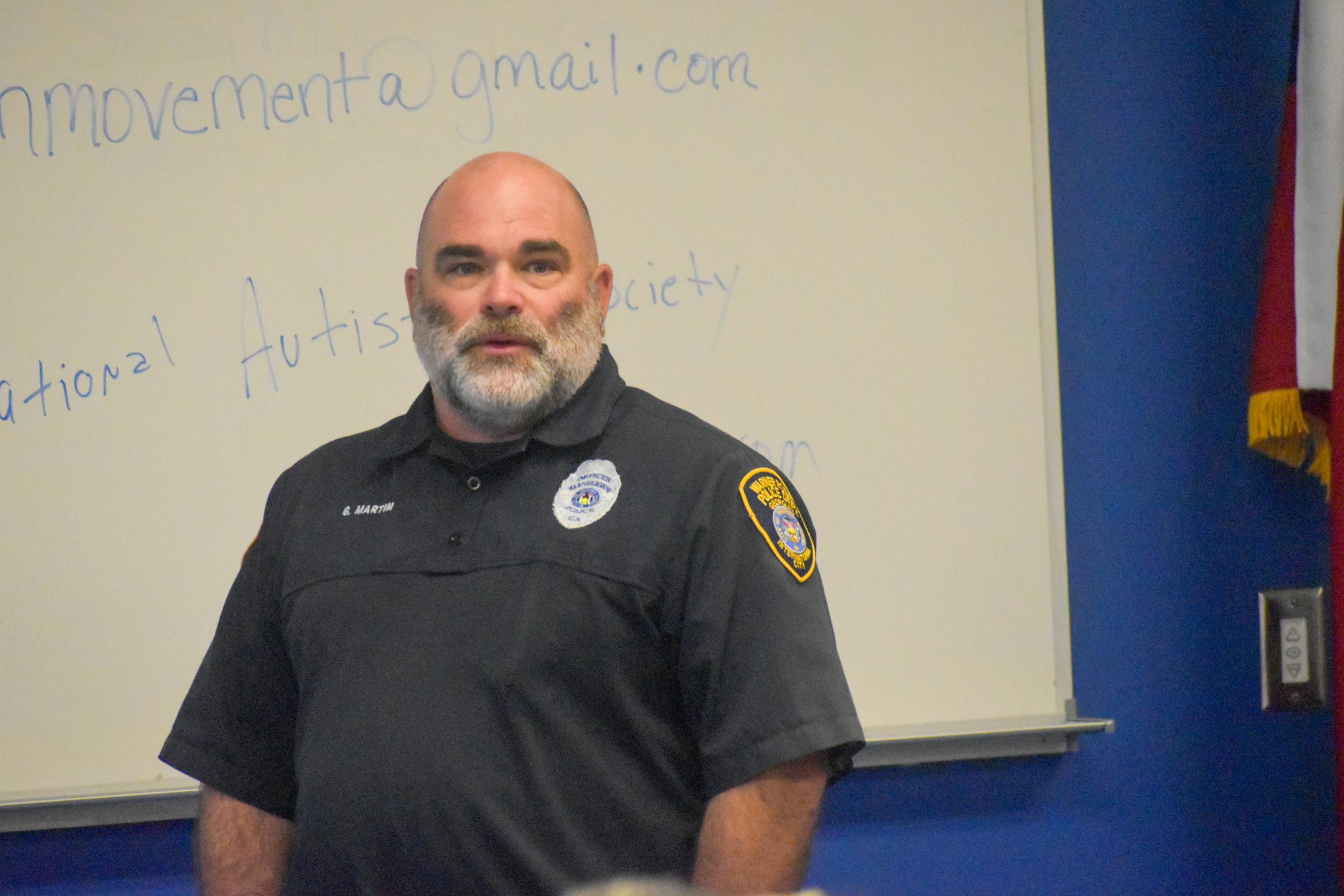
WARNER ROBINS — In recognition of Autism Acceptance Month, a collaborative event uniting local law enforcement, neurodivergent families, and community members was held on April 24th. Hosted by and at the Warner Robins Police Department, the autism and neurodivergent focused town hall served as a platform for open dialogue surrounding neurodiversity and its intersection with public safety.
The gathering aimed to foster greater understanding and communication between the groups.
The Police Perspective
Starting the meeting was Warner Robins Police Chief Wayne Fisher, who expressed a desire to compile a list of approved community crisis resources that can be distributed to neurodivergent families. He said department referrals must be licensed, bonded and insured.
In discussions regarding neurodivergent individuals, Fisher emphasized the crucial role of law enforcement in de-escalation. He pointed out that police intervention usually occurs during a crisis, and families are typically well aware of the triggers beforehand.
“They know what the triggers are that can cause that person to get in an excited state, and have that information on what can be common,” Fisher said.
Law enforcement typically responds to crises, but their presence can escalate situations for individuals who may not fully understand their actions. De-escalation becomes a delicate balance in these instances, Fisher mentioned.
“We also understand coming into one of these calls that we definitely have to be cognizant when we get on the scene that our presence alone is going to cause potential agitation,” Fisher said.
Law enforcement is uniquely positioned with arrest power in public safety matters. Their response to situations involving mental health crises is dictated by the specifics of the incident and the resources at their disposal, particularly if there’s a potential for harm to the individual, others, or property.
According to Fisher, the department is trained to manage calls related to compromised mental health. The primary role of law enforcement is to stabilize the situation, an approach that will likely differ from that of a clinical setting.
“The nature of the event will dictate certainly how much time we have in using the techniques and tactics that take place and sometimes you have to go in to reinforce and resolve that situation. We definitely understand it’s shocking and not what you anticipated as the outcome can be very traumatizing,” he said.
Community Initiatives Officer Greg Martin discussed the department’s efforts to connect families and law enforcement. His presentation included information on the Easy Child ID System and the department’s collaboration with Special Olympics Georgia.
The Easy Child ID, Martin said, is a voluntary program where police will take information, including the child’s photo and fingerprints, give them an identification card, and file the information away in case it is needed for police response.
Martin also said the department works very closely with Special Olympics Georgia, providing support during events and fundraising for the organization.
He encourages anyone interested in either program to contact him by email: gmartin@wrga.gov
Emergency Accommodations
Lt. Veronica Edens, assistant director at the Houston County 911 Center, and Jami Mullis provided insights into dispatch operations. Edens, motivated by having a son with autism, is dedicated to enhancing the center’s ability to support the safety of neurodivergent individuals and their families. She developed a training program for both law enforcement and the 911 center, which has been shared with numerous centers across the state.
The center offers a voluntary program for families to register neurodivergent individuals living in their household. By completing a residential premise form, a notification will be added to the center’s system, alerting dispatchers to the presence of a neurodivergent person at that address. These forms are updated every six months by Edens to verify the accuracy of the address.
“This is something that has truly helped law enforcement. We put it in our system, they see what the likes and the dislikes are of the individuals, and they are able to respond more appropriately,” she explained.
Mullins, whose daughter has autism, expressed that the program holds personal significance for her. Aligning with Fisher’s sentiment, she emphasized that families possess the deepest understanding of their neurodivergent members’ needs.
To illustrate how responding agencies can effectively assist, she provided examples such as deactivating lights and sirens or using comforting language.
“It’s stuff that we can know to de-escalate while we’re on the phone, and we have those cued up when officers are on the way, so we can set them up for success… it’s completely voluntary, but it makes a world of difference on our side when we know what we’re coming to,” Mullis said.
Anyone interested in filling out the form should contact the 911 center at (478) 542-9911 or email Edens at vedens@houstoncountyga.org.
A Parent’s Perspective
Joycelynn Patterson was a main source of inspiration for the meeting after she and Fisher spoke over the phone in late March about concerns with law enforcement’s approach to interacting with neurodivergent individuals. Patterson, who has a son with autism, became passionate about the topic after a traffic stop involving her husband and son.
She said her husband was stopped by a Houston County Sheriff’s deputy for a broken tail light. Fearing a reaction from his son, and considering the traffic stop was during the COVID19 pandemic, he advised the deputy to stay at a distance.
She said the stop escalated after the deputy called for backup, leading to her husband being taken out and slammed on the hood of his car. Patterson, who was not in the car at the time, said she felt completely helpless.
“That hopeless feeling that you get when something is about to go down and you know there’s nothing you can do, is a feeling that I don’t want to happen to anyone. To get a phone call that my partner’s been pulled over and I know my son’s non-verbal. He can’t talk. So what is about to happen here is the officer does not have any type of compassion for what’s taking place,” she said.
In response to the event, Patterson started a petition to mandate mental health and neurodivergent training for law enforcement, and pitched the idea of the city providing standardized cards, alerting law enforcement that a car may contain neurodivergent individuals.
She also started an organization that seeks to equip neurodivergent families with resources named Project BAAM.
Anyone interested in learning more can email Patterson: projectbaammovement@gmail.com.
Understanding Autism
Sylvia Meyers spoke to provide first hand experience on having autism. Meyers, who was diagnosed as an adult, is an accomplished author, grief specialist, a motivational speaker and is studying for her doctorate in traumatology. As a motivational speaker, her focus is on grief after losing her teenage son.
Autism is a complex, primarily genetic condition, not a contagious or curable disease. Each person with autism experiences it uniquely, often exhibiting a strong sense of morality and increased sensitivity to unfairness, Meyers said.
From her viewpoint, she described particular requirements individuals with autism might have when encountering law enforcement. For example, she requires adequate time to adjust to alterations in her routine and benefits from clear, step-by-step instructions.
“If you throw a bunch of stuff at me right now, I may not be able to process it within time. So if you pull me over to grab some address, I might need a minute or two,” Meyers said.
A resource she recommended for neurodivergent individuals is a free printable card from the National Autistic Society that can be provided during interactions with law enforcement that explains common symptoms and advice.
The card can be found at the National Autistic Society’s website.
Before you go...
Thanks for reading The Houston Home Journal — we hope this article added to your day.
For over 150 years, Houston Home Journal has been the newspaper of record for Perry, Warner Robins and Centerville. We're excited to expand our online news coverage, while maintaining our twice-weekly print newspaper.
If you like what you see, please consider becoming a member of The Houston Home Journal. We're all in this together, working for a better Warner Robins, Perry and Centerville, and we appreciate and need your support.
Please join the readers like you who help make community journalism possible by joining The Houston Home Journal. Thank you.
- Brieanna Smith, Houston Home Journal managing editor
Paid Posts
Author

Related Articles

Department of Justice reaches $3 million settlement with various Georgia Boards for alleged violations of the Servicemembers Civil Relief Act
The DOJ has reached a $3 million settlement with 42 Georgia Boards to resolve allegations that they did not recognize the Servicemembers Civil Relief Act.
Lori Johnson hoping to continue putting students and faculty first while serving on the Board of Education
Lori Johnson is running for reelection for Board of Education District 2 and hopes to continue her commitment to the students and faculty of the Houston County School District.

Warner Robins shooting leaves two injured, police say
Law enforcement also found and detained a suspect.