
Protecting the vote
Dear Readers, People have political and philosophical debates about whether we are a republic, a democracy, or some sort of mixture. What is indisputable is that free and fair elections are a bedrock of our political system. Protecting the vote is fundamental to our country’s body politic.
It is indisputable that elections matter and have consequences. If we cannot have faith in the administration of elections, the vote is defective, and the legitimacy of our government dissolves. Our experiment at self-government fails if we cannot trust our voting results.
Election law is a specialty practice. There are “dark” nuances to it that just being a lawyer is not enough to understand the ins and outs. Generally speaking, the legislature passes laws, local election boards supervise county-level voting, they report to a State Election Board, and the Secretary of State oversees elections to ensure they are properly conducted. When there are accusations of “stolen” or “fraudulent” elections, this implies there were failures at multiple levels.
In Georgia, election results are certified by the Secretary of State (as is true in many states) as the Chief Election Officer. This has the potential to create some tension with the State Election Board.
Until 2020, the Office of Secretary of State, while a statewide position, was a “sleepy” office and we did not pay that much attention to it. Yes, the Secretary of State administers businesses and licenses professions as its mission – certainly an important responsibility, yet not a high-profile governmental perch.
The Presidential election spotlighted our Secretary of State, Brad Raffensberger. All those allegations of fraud and a “perfect” phone call in 2020 hunting 11,780 votes to overturn the results in Georgia raised his profile, as it has for Secretary of States across the country. A rogue one could undermine the vote of millions of state citizens.
Georgia’s Statewide Election Board falls under the umbrella of the Secretary of State’s responsibility to administer and certify elections. The Board’s duties are supposed to be to confide in setting rules for elections and counting votes. It also makes recommendations to the legislature for new laws.
Board members are supposed to be non-partisan and independent, above the fray when it comes to political battles, neither personally involved in elections nor family members, and a bar to endorsing/campaigning for candidates for political office. Georgia’s Board is comprised of 5 members, one of each appointed by the Governor, Senate, House, Democratic Party, and Republican Party. Local boards mirror this mix of partisan and non-partisan members.
On the eve of the coming election, Georgia’s Board of Election is trying to make new rules governing how local boards conduct it. “Election” denying members endorsing, without proof, the false flag fraud that occurred in the 2020 Presidential election are maneuvering to grind the election infrastructure to a halt.
The job of conducting and counting votes is thankless. Civic-minded people either volunteer their time or are paid a paltry sum to greet us when we vote, hand us our election cards, and help fairly record and count our votes. The hours are long and boring. Election workers are patriots fulfilling a civic role without which we could not confidently vote. The mysterious whispers ultimately cast aspersions on these patriots and cut at the soul of our national identity.
Hours of preparation and training go into our elections. COVID changed how we voted, with fewer days of election and more by mail-in ballot or advance voting. Our army of election workers adjusted because they had prepared for this new reality.
Our election infrastructure requires months of preparation. Ballots have to be printed; workers have to be trained. The United States Supreme Court accelerated its consideration of the Colorado litigation about Donald Trump’s place on the ballot with this in mind. Alabama’s congressional redistricting map was ruled unconstitutional by the Supreme Court after the 2022 election, where it refused to consider its legality before.
Our Governor, Brian Kemp, is struggling with his authority over the current Statewide Election Board to stop it from committing mischief on the eve of our coming election. It is considering new rules approximately a month before we start early voting, commencing on the 4th Monday before November 5th.
Elections matter; our country depends on them. We need to have faith that they are legal and fairly conducted and that we can trust the results. Trying to “game” an election to cause inevitable chaos damages us and how we govern ourselves. This must be prevented.
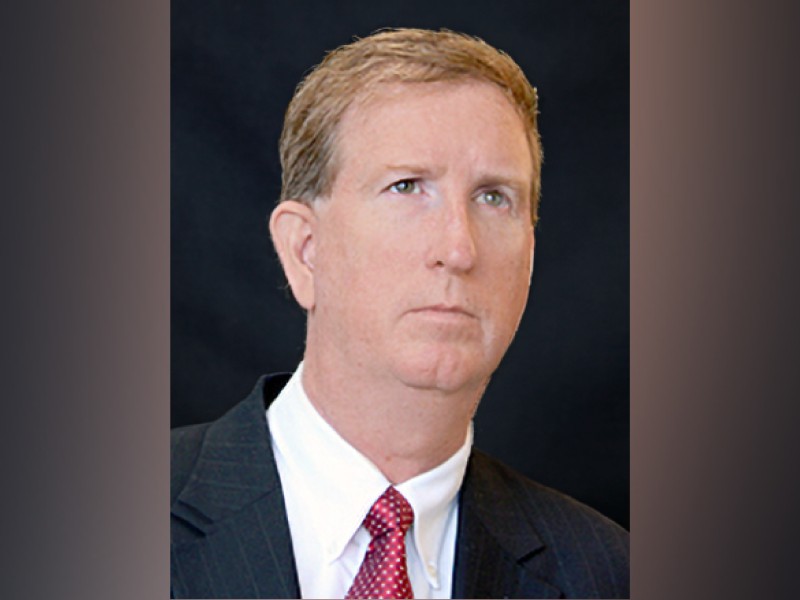
Warner Robins attorney Jim Rockefeller is the former Chief Assistant District Attorney for Houston County and a former Assistant State Attorney in Miami. Owner of Rockefeller Law Center, Jim has been in private practice since 2000. E-mail your comments or confidential legal questions to ajr@rockefellerlawcenter.com.
Before you go...
Thanks for reading The Houston Home Journal — we hope this article added to your day.
For over 150 years, Houston Home Journal has been the newspaper of record for Perry, Warner Robins and Centerville. We're excited to expand our online news coverage, while maintaining our twice-weekly print newspaper.
If you like what you see, please consider becoming a member of The Houston Home Journal. We're all in this together, working for a better Warner Robins, Perry and Centerville, and we appreciate and need your support.
Please join the readers like you who help make community journalism possible by joining The Houston Home Journal. Thank you.
- Brieanna Smith, Houston Home Journal managing editor
Paid Posts
Author

Related Articles
The ultimate fishing guide
The show “The Madison” on Paramount opens with a terrific first episode.

More on getting older and living in science fiction world
Nothing has saved people more time than computers.

‘Toon’ In for April — Jim Balletto
April’s comics from cartoonist Jim Balletto.