The legal travesty that is qualified immunity
Dear Readers, There are plenty of honest, community-loving police officers who take an oath to serve and protect with honor. They are the epitome of some of the best humans around, humble and deeply caring of the people they serve.
The life of a law enforcement officer can be a thankless job. The shift work many of them perform is a relationship and family killer. The same with emergencies for major felonies like murders and rapes, disrupting sleep and personal lives. The pay is dreadful, although the retirement may be decent. An officer has to be willing to stoically accept public invective when passions run high. As the song might have said … “Momma don’t let your youngster grow up to be a law enforcement officer.”
It is high time we fixed these inequities. Pay officers better and give them a real bona fide career path. Eliminate the need for a second job to help pay the bills. And, by all means, add a layer of professionalism.
The need for professionalism is paramount because the courts have all but made it impossible to hold a bad egg legally responsible. 42 U.S.C. § 1983 exists to allow citizens to sue when their constitutional or federal guaranteed rights are violated. It is a path to holding a governmental official responsible when state laws might be lacking. Further, there is a lane to hold an entity responsible for the wrong if its own failures are the moving cause of the constitutional violation.
The companion statute, 42 U.S.C. § 1988, allows for the recovery of attorney’s fees if a litigant substantially prevails on a claim. This is important, as not every constitutional violation is about money. Say a student is either placed in the uncomfortable place of having school prayer in a classroom or barred from openly expressing their faith. In either scenario, though polar opposites, there may be a constitutional issue but very little monetary damage. Having a statute authorizing payment of attorney’s fees incentivizes attorneys to help right wrongs, where the time and case costs expenses are daunting.
This all seems like a societally beneficial legal construct. Except the Supreme Court has made it almost impossible to sue because of the twin hurdles of “clearly established right” and “qualified immunity.” Many good cases, trying to right a wrong, never get to a jury because of them. All because of judicially created legal defenses.
Not having effective legal mechanisms allows cancers to metastasize, and it’s not just citizens who suffer. Anecdotally, there are many sad stories to explore. I’d like to share some of what occurred last year.
In Las Cruces, New Mexico, Teresa Gomez, a 45-year-old grandmother, was stopped in her car outside a housing project with a male passenger. An officer drove up to investigate. He demanded information from her, stating she was trespassing. Ms. Gomez exits her vehicle; discussions are had; she gets back into her car and starts to drive away slowly. No offense has been committed, and she cannot be lawfully detained. Officer Felipe Hernandez yells three times to stop and then opens fire – one of the rounds hit Ms. Gomez, killing her. She gasped for air for about 2 minutes before he called for assistance.
Earlier last August, another officer from the same department, the Las Cruces Police Department, shot and killed a man who left a gas station without paying for a beer. Ironically, he turned himself in on Voluntary Manslaughter later the same day Ms. Gomez was murdered.
In October, the Kentucky Supreme Court issued a ruling barring a partially paralyzed former Deputy, Jaime Morales, from suing because a police officer, Joseph Enricco, shot him in the back. He tried to sue the Police Department for inadequately training Officer Enricco, who had only completed a basic training course. The Court nixed that idea on the principle that officers have “special protection” and the defendants were entitled to qualified immunity.
As hard as it is to be an officer, we must wake up and let the justice system do what it intended – right wrongs and establish guard rails. Putting up artificial legal barriers robs us of the ability to set rules for conduct. We cannot cull bad apples before horrible results occur and send messages to departments about proper training and supervision. This also keeps grandmothers alive and prevents deputies from being paralyzed while serving the community.
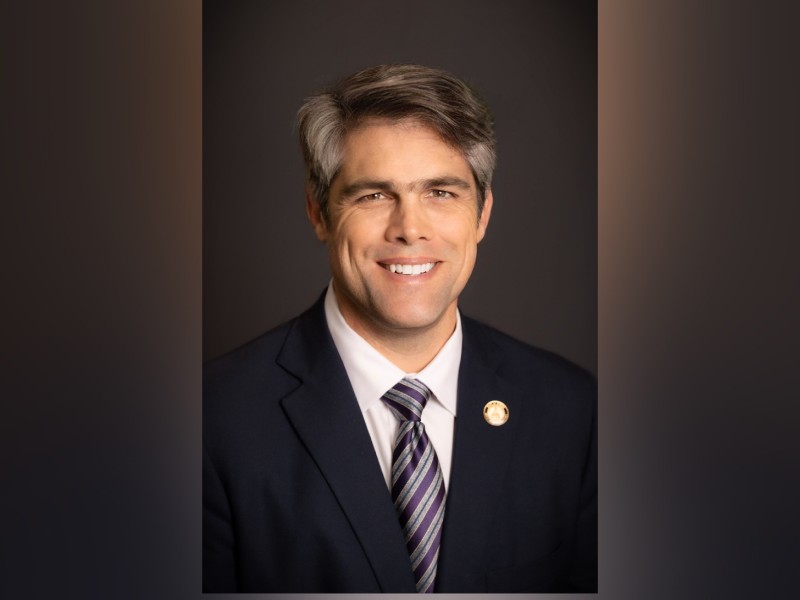
Warner Robins attorney Jim Rockefeller is the former Chief Assistant District Attorney for Houston County and a former Assistant State Attorney in Miami. Owner of Rockefeller Law Center, Jim has been in private practice since 2000. E-mail your comments or confidential legal questions to ajr@rockefellerlawcenter.com.
HHJ News
Before you go...
Thanks for reading The Houston Home Journal — we hope this article added to your day.
For over 150 years, Houston Home Journal has been the newspaper of record for Perry, Warner Robins and Centerville. We're excited to expand our online news coverage, while maintaining our twice-weekly print newspaper.
If you like what you see, please consider becoming a member of The Houston Home Journal. We're all in this together, working for a better Warner Robins, Perry and Centerville, and we appreciate and need your support.
Please join the readers like you who help make community journalism possible by joining The Houston Home Journal. Thank you.
- Brieanna Smith, Houston Home Journal managing editor
Paid Posts
Author