
Meet the Georgia State Senate District 20 candidates – Julius Johnson
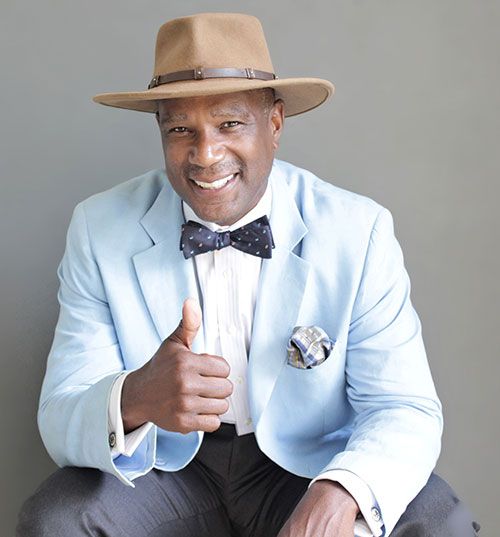
As a descendant of Houston County’s Newberry family, Julius Johnson said his roots in middle Georgia go back to 1808 when his seventh generation grandmother, whose name was Mariah, was brought to Houston County by Henry Wimberly, a white planter who, as a result of a lottery, had been given 2,000 acres of land on Highway 341 (Wimberly Road). Mariah was a slave, but she and Charles Newberry, a British planter who lived in Pulaski County had a child together who was named Charlie Newberry.
“That son went to the war against the states with Henry Wimberly’s son, who Mariah also raised, which was customary during that time,” Johnson explained. “And then in 1873, after the war, that little boy, Charlie Newberry, married a woman named Violet, and they had four sons. Violet and three of the sons purchased 300 acres from the Wimberly family in 1873, and they paid for the land with cotton, and received the deed in 1877, right on [Highway] 341 Lot#72. Those 300 acres were purchased in 1873 from the Wimberly family. So, fast forward,” he continued, “and one of the children of Charles was John, and John had a son named Charlie, and Charlie had a son named Frederick, and Frederick had a daughter named Rosa and Rosa is my mother.”
In the 1960s, Johnson said his mother, like many African Americans, migrated north. Once there, she gave birth to three children, one being Johnson. “But she would send us back to my grandfather’s farm on Newberry Road in Houston County,” Johnson recalled, “So I grew up with a northern education, but in the summers, I spent time in Houston County.”
The schools Johnson attended included St. Lawrence University where he received his undergrad degree, Yale University, where he acquired his masters and now, he is in the process of writing his dissertation to obtain his PhD from Howard University.
“Going to school, my major as an undergrad was Political Science,” Johnson shared. “During my undergraduate education, I learned about the importance of good governance and the role that politicians play in determining who gets what, when and how much, in a particular area. The more I learned about government and politics, the more I realized it was a very important arena that provided an opportunity to make a difference in the lives of people.”
Johnson has traveled the world and has visited more than 30 countries. He has lived in Saudi Arabia, East Africa and most recently, he spent two years in Afghanistan. His extensive travel and world exposure are two of the things that make him feel he is the best candidate for the District 20 senate seat.
“Those experiences have given me a global perspective—a heightened IQ around the importance and power of cultural diversity, and the awareness of the interconnectedness of people from different countries. Our region must enter into the 21st century acting responsibly locally, but increasing our awareness globally, because the world is increasingly interconnected,” Johnson stressed. “A state representative of the future has to be able to engage in the world; not just locally, regionally and nationally, but also internationally. What makes me qualified for this position is my unique ability as a result of my overcoming insurmountable odds, proving myself in Afghanistan with the war on terror, traveling internationally; it allowed me to effectively advocate on behalf of ordinary people. Also I’m qualified by my advocacy skills and my ability to write effective legislation and provide a vision with a specific plan of action to meet the needs of citizens within our region.”
Johnson maintained that he is able to transcend partisan politics, stating, “I don’t see myself as a Democrat or as a black man; but rather as a representative of the people—all people. I’m not beholding to any sponsors or donors.”
Much of his political skill set and experience comes from the time he served as Senior Governance Specialist Johnson for the United States Department of State.
“In that particular position, I was responsible for assisting the government of Afghanistan with strengthening their governance structures,” he shared. “But in addition to my role as State Department Senior Governance Specialist, I also served as the Regional Coordinator of the Middle East and East Africa for the United States Department of Agriculture (USDA) where I worked directly on more than $300 million of food aid to those regions.”
If he comes out the victor once all the votes are counted on Election Day, Johnson has a four-part goal that he will pursue as Georgia Senator of District 20.
“People in our region need economic development.” Johnson explained. “We’ve got to focus on reeducating and retraining our people in areas of energy, technology and agriculture because that’s where the jobs are going to be. We’re talking about solar energy, wind energy, technology, agriculture, manufacturing—these are the jobs of the future. We have to train the people in our region by leveraging our existing universities and linking our universities with our local governance structures, chambers of commerce, high schools and private industry.”
Johnson also shared plans to target health and wellness. “We have to get in shape. We need a very strong health and wellness initiative where we can begin to live longer lives and have fewer illnesses,” he declared. “This will bring down our health care costs and give us more productive lives to be able to enter into the new job market. We’ve got to deal with our obesity, hypertension, anxiety, diabetes and these preventable ailments that come from our poor lifestyle. We’re too sedentary,” Johnson said. “We need to wake up and activate the people in our region around healthy eating, which is about education, but also access to good food. We need to really do something about our food deserts and create affordable and accessible food to the people in our area along with education and awareness of nutrition.”
As a third mission, Johnson pointed out the local downtown areas and industrial parks. “We have to renovate our historic downtowns, and we need to incentivize businesspersons and non-traditional downtown business owners like our African American community and our Hispanic community through incentives to help in leveraging their unique cultural heritages to occupy these downtown spaces and create businesses around historic heritage tourism, which is a multi-billion dollar industry. We must leverage our African American cultural history effectively in our downtowns because it will attract billions of dollars to our area through heritage tourism.”
Rounding out his four target areas, Johnson said, “We have to heal our communities, and just like we need to be more nonpartisan in terms of political party, we have to begin to strengthen the ties that bind us together of racially different categories. We incarcerate too many of our citizens who are typically poor and male and African American,” he asserted. “We have to revise our criminal justice operations. We have to work effectively with our police departments to ensure law and order while they undergo their needed and important reform, and partner effectively with community leaders, law enforcement, educators and business entities so that we can begin to reduce our number of incarcerated young people, including women whose children are also affected by their incarceration. We need to make sure we have funding within the state budget strategically targeting creative and imaginative ways to reduce the number of people we are incarcerating, sensitizing our local sheriff and police departments to the changing demographics and needs of people and making sure our police departments have the resources so that they can focus on crime prevention and law and order and those citizens that need mental health services and drug problems aren’t being criminalized, because drug addiction is not a criminal issue, it’s a health issue.”
At the end of the day, Johnson said that this election is not so much about whether he or his opponent, current District 20 representative Senator Larry Walker will serve as the next representative. Instead, he said, “This is really about what the people of District 20 are prepared to do to better their community. We have a tremendous opportunity to really determine the future of our region. The community has a responsibility to reevaluate their values and to really ask themselves, am I doing all that I can do, or am I only looking out for myself? We are not going to improve people’s lives, we are not going to save our children and we are not going to be competitive, if we don’t have a revolution of our values. That’s what this election is about. It’s about really doing the best that each one of us can do to live the best life that we can—this precious gift of life—and sharing it with others, irrespective of race, class, gender and/or religion.”
Johnson is the founder of the Newberry Foundation based in Hawkinsville, Ga. where over 300 families per month are fed through the largest community food program in Pulaski County. More information can be found at www.thenewberryfoundation.org.
HHJ News
Before you go...
Thanks for reading The Houston Home Journal — we hope this article added to your day.
For over 150 years, Houston Home Journal has been the newspaper of record for Perry, Warner Robins and Centerville. We're excited to expand our online news coverage, while maintaining our twice-weekly print newspaper.
If you like what you see, please consider becoming a member of The Houston Home Journal. We're all in this together, working for a better Warner Robins, Perry and Centerville, and we appreciate and need your support.
Please join the readers like you who help make community journalism possible by joining The Houston Home Journal. Thank you.
- Brieanna Smith, Houston Home Journal managing editor
Paid Posts
Related Articles

Warner Robins man banished from Houston County after reckless gun violence results in ten-year prison sentence
Jaylon Dontez Smith, 21, of Warner Robins was sentenced to 10 years in prison for aggravated assault and will be banished from Houston County after his release.
Middle Georgia’s first Jack in the Box coming to Perry this fall
Popular west coast fast-food chain Jack in the Box is set to open in Perry within months, marking its first location in Middle Georgia.
Interfor’s dust output and log truck traffic concern Perry residents and employees. What is the city’s solution?
City leaders had an off-agenda discussion over log trucks and dust pollution. But, there is a solution in the works.