
Abba House Safety and healing for women in need
An old grocery store in Perry is dealing in another kind of nourishment these days.
Abba House Thrift Store, in a former Harvey’s super market, supports a ministry for women with emotional wounding. It is a safe place for women to come and receive God’s love and forgiveness.
Getting help at Abba House cannot be undertaken lightly. The ministry at Abba House is Christian in nature and content. However, non-Christians are welcome to participate.
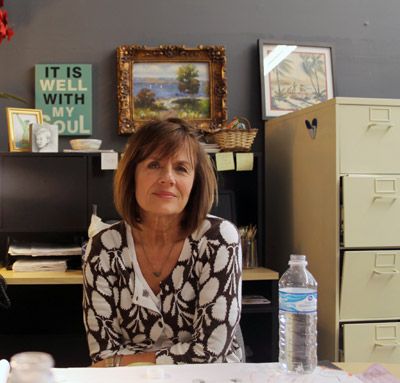
Pamela Rollins, a native of Orlando, Fla., is the volunteer coordinator in Perry. She knows well of what she speaks.
“I’ve been on staff here a couple of years and I came through this ministry,” she said, seated at her cluttered desk. “I hit a brick wall in my 50s and sought out a place where I could really change this (gestures toward her head). I have raised a family, I’ve owned businesses, was a successful professional artist, left an abusive marriage and felt that something’s got to give, something’s got to change, and this is where I found it. This is where a lot of people find that change.”
What is it about Abba House that is conducive for women looking for that change? What is it about the ministry that helps them focus?
It’s different for everybody, said Rollins For some women, more the younger women, they need the safety and the structure this program provides. They haven’t been taught any kind of structure. Rollins said it’s like what we would take for granted, like getting up and making your bed, or eating at a certain time, bathing at a certain time, doing routine things.
“A lot of these women are so damaged or so broken that that’s the last thing on their mind,” said Rollins. “This is a safe place. A lot of people come here because they’re not safe where they are. A lot of women come here because they are throwaways. Their family has had it. ‘I’ve put you in rehab five times and nothing works, and I’m out of money and I’m not going to do this any more with you. Good-bye.’ They burn bridges.
“Where are they going to go? This is a Christian ministry, so whether you can pay or not, we rarely turn anybody away. If you want help we rarely turn anybody away.
“I came here because … I think a person older or more established or, for lack of a better term, more educated, it’s a sabbatical. It’s a spiritual sabbatical. Some others might not see it that way, but that’s what it is. You’re forced into a sabbatical from life. Because you don’t have to pay bills, you don’t have to worry where your food is coming from, you don’t have to worry about anything other than ‘what went wrong?’
“All the basics, all your needs are taken care of so all you have to do is focus on getting better. And changing your heart. So that when you leave – it’s long, it’s 15 months residential – if they last that whole time when they leave, they are changed, they’re not the same person. I came here full of depression and anxiety, and I just didn’t have it. I couldn’t talk to anybody, and I’m a teacher and I couldn’t talk to people any more, but now you can’t shut me up (laughs).
“I’m just so passionate about this ministry. It’s very, very hard. The door just revolves. The average woman stays here five to six months, feels better and then moves on. The success rate for those who stay is 93 percent. Never taking another antidepressant, never taking any more medication for anxiety, for those who were in trouble with the law, never being in trouble again, never going back to jail. Because a lot of these girls were repeat drug offenders.
“Another huge thing is many of our women are mothers who have never raised their children. They’re so broken themselves. They were handed off to a grandmother or an aunt or to the system as children themselves, and they get to that age pretty soon they have children themselves. Here, they take multiple classes on parenting, and we go get those kids and bring them here and they learn how to be moms. I mean, that’s the most beautiful thing, I think.
“The moms have to be here about four months, which is a good amount of time. They’re taking parenting classes continually until they get to the second phase of the program which hits after four months. We’re not going to bring any children here if the mom doesn’t seem ready. Four months is the average and most of them are ready at that time.
“Most of them are smokers, but once here they have to put it down. There’s no weaning off. And the same goes for their anti-depressant medications. There are no drugs here at all, except for Advil or Tylenol, which we hand out. And you never hear, except for maybe one little bit their first week. ‘I wish I had a cigarette,’ and these are girls who are smoking three packs a day. There’s something about this place, maybe the safety, the calmness, the belonging, the sense of family – all that replaces that need to self medicate. It’s quite a culture shock to come here.”
About how many women come here annually?
“The average is about 15,” said Rollins. “We keep about 12 to 15 women at the campus. And they take classes and have group therapy, which we call simply Group, a class all morning, and then they eat lunch and come here and work.
“Now this store is part of the way we support them here. There is tuition, but usually about 80 percent of the people here are on ‘scholarship’ because, you know, families are out of money or are not willing to do that any more. The thrift store provides about one-third of all the house needs to support a woman here per month. So, to help support themselves here, they work. They don’t actually get paid, it’s just part of the treatment.
“When I tell people I work at Abba House, they usually respond with ‘that’s a very good thrift store,’ not aware that we’re a ministry.
“Now I had every intention after I had my little year of life sabbatical to go back to Orlando, pick up where I left off. But six months into this, with these women who were my daughters’ ages, I just knew I was going to pick this teaching up right here. In fact, I think I went through what I went through just to be here. I mean, it was so awful and I hardly remember it. That’s how changed I am. I thought it was the end of the world, but really it was to get me here. And all the staff here, especially in the Perry campus, nobody works here who doesn’t know what these girls went through. You have to have experienced it yourself.
“You’re not going to get a psychology degree and come here to minister to these people. I mean, they’re not going to hear it. I can look a woman in the eye and say, ‘I know what it’s like to wake up and see dark when it’s fully light outside. I know what it’s like to wake up and not want to get up and face the light of day and wish that God would just take me in my sleep. I know what that feels like.’ That builds a level of trust.
“It’s different for everybody, because a small percentage of women come in here kicking and screaming, but most come because they know ‘I’ve got to have something different.’ People don’t call us for themselves; it’s mostly a mother or father. ‘My daughter is out of control. What am I going to do? Can you take her tomorrow?’ No, we have a process. The ‘light bulb moment’ sometimes is somebody else.
“Now we can’t take anybody unless they’re willing to come. So, they have to be somewhere in the dark of the night or in the street somewhere or sitting in jail facing a long sentence because of some drug charge of possession or selling or something, which is just a symptom of what’s wrong – we don’t even talk about that here. They’re facing punishment, they’re facing that, they’ve been ostracized from their families, and that’s their low moment. That is it. ‘I’m alone,’ they feel. One of the things we talk about here when we do inner healing is that nobody comes in here knowing what it is that makes them anxious, they just know it’s really wrong, what I’m doing is really wrong, how I’m living is really wrong and it’s unacceptable any more to me, to my family, to the world, to society, I’m going to die, and I’m all alone in this, I’m facing dark, facing death, that’s what it is, and when you’re that alone, you can’t survive. For most humans the instinct is to live, so where do you go where you might be able to live?”
Is there a set time for the healing?
“Some people leave – against our advice – after six months. Nobody is done in six months. It’s like a cruise ship and you’re wanting to change direction. We want it to be done just like that, but it can’t be done. You have to make small corrections and build on them. You have a lifetime of false conceptions and beliefs about yourself, about the world, about God, about your place in the world and all of this is false and you’re making choices out of those false beliefs. That’s basic to this program.
“So how do you learn to make right choices based on the truth? And when you’re here, in class, and going through group, we learn how to hear God’s truth. That’s what we believe here. ‘God, I am not worthy, I am not worthy to live’ – that’s the truth for some women – ‘I’m so bad, I’ve left my children, my parents hate me, my kids hate me. Why should I live? I’m not worthy. And God, what is the truth? What’s your truth?’
“Well, He’s going to tell you the truth – that you are worthy. I love you. I do want you to live. You are worth it. You’re special. You’re my daughter. And they’re going to walk away degree by degree. And if you get the ship 20 degrees to where you’re supposed to be going, you’re still not there. You’re better but still not where you want to be. It’s frustrating to see that happen. But you think that in that 20 degrees you’ve sown enough seeds of truth that they’ll remember wherever they go.”
Do you see the potential for redemption in everybody?
“Every single person has the potential to make that 180-degree turn. There is nobody that is hopeless. We believe that. Where in the Bible do they hear ‘you’re a mess. Why can’t you be like your sister? Why can’t you be like your brother? I would never have blah blah blah. How could you?’ and that’s maybe from 5 years old on up. That’s what you hear, maybe from birth up. ‘I wanted a boy. Why are you a girl?’ It’s crazy. It’s not always that your parents burned you with cigarettes, though many, many women here have been horribly sexually abused as children and as teenagers. I can’t relate to that, but I’ve seen it over and over and over in these women. If there’s anything that makes you feel dirty and not worthy to live, it’s that. Even though you’re the victim. They come here to get healed from that, too.”
A minimum 15-month commitment is required. Residents are required to assist with daily tasks at Abba House and to work at the Abba House Thrift Store.
Abba House Thrift Store is at 1309 B Main St.
HHJ News
Before you go...
Thanks for reading The Houston Home Journal — we hope this article added to your day.
For over 150 years, Houston Home Journal has been the newspaper of record for Perry, Warner Robins and Centerville. We're excited to expand our online news coverage, while maintaining our twice-weekly print newspaper.
If you like what you see, please consider becoming a member of The Houston Home Journal. We're all in this together, working for a better Warner Robins, Perry and Centerville, and we appreciate and need your support.
Please join the readers like you who help make community journalism possible by joining The Houston Home Journal. Thank you.
- Brieanna Smith, Houston Home Journal managing editor
Paid Posts
Related Articles
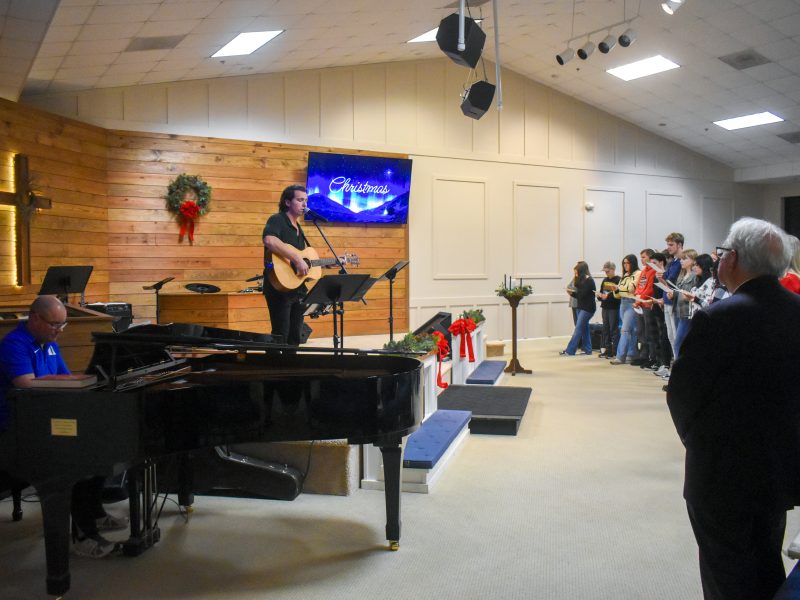
‘Christmas at the Crossroads’ brings the community together to celebrate the meaning of the holiday
Despite rainy weather, Christmas at the Crossroads united local pastors, city leaders and worshippers for a shared reminder that Christ is central to Christmas.
Family Promise provides needs for Houston County’s children experiencing homelessness
The organization has been assisting families for over a decade, providing practical and sustainable help.
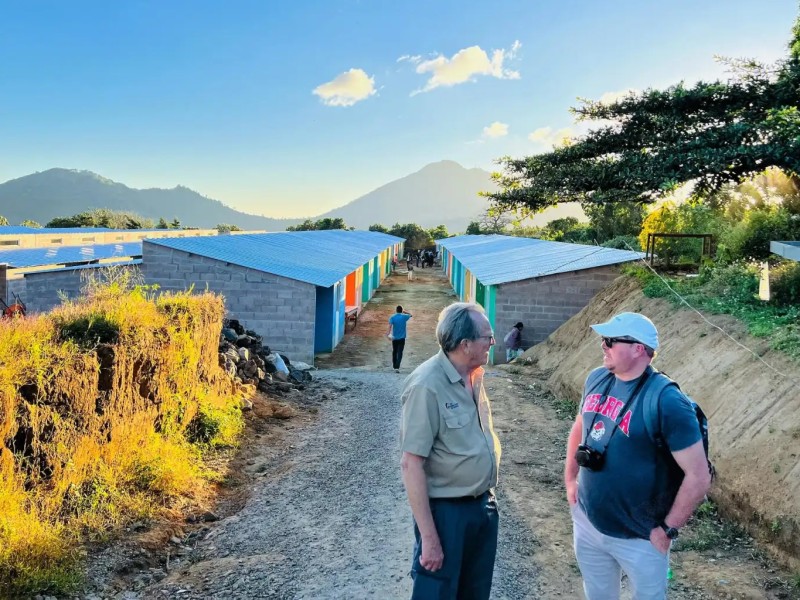
Local author’s latest book ‘Hope in Action!’ highlights outreach in El Salvador
Proceeds from book sales will also go towards outreach efforts in the country.