Rights to privacy, freedom of information, and the role of the prosecutor
Dear Readers,
Prosecutors have great discretion
in deciding which cases to prosecute. There are many, many laws on the books
that are never enforced.
For
example, adultery is still a crime in Georgia punishable by up to 12 months in
jail. The last reported appellate court opinion concerning an adultery conviction
was more than 20 years ago. That should give you an idea of when it was last
prosecuted by any prosecuting attorney.
You probably have not heard of Aaron Swartz. At the time of his death, he was
26 years old. He was one of the programmers behind the “RSS” protocol that
permits us to subscribe to feeds, providing us with automatic notices. He is
dead, according to his family, because of an unfair prosecution against him for
“hacking” into the servers of the Massachusetts Institute of Technology (MIT)
to make a point about the freedom of academic thought. Mr. Swartz is dead
because he committed suicide.
The point of his family is that this was not necessary. Mr. Swartz had attached
removable hard-drives in isolated electronic closets at MIT. The purpose of
doing so is that Mr. Swartz was offended by the fact that he felt “Journal
Storage” (JSTOR) had been distorted from its original concept.
Back in
1995, seven different academic libraries started to participate in JSTOR as a
pilot program. The idea was to digitalize academic journals, making them
“searchable,” as a cost-savings measure on storage costs. However, in the law
of unintended consequences, from Mr. Swartz’s perspective, the result had been
to inhibit research and the free exchange of academic expression and data.
So, Mr. Swartz plotted. He carefully and quietly tried to download over four
million articles. MIT caught him in the act and he turned his ill-gotten booty
over to JSTOR and MIT. As a consequence, both JSTOR and MIT chose not to sue
him.
But, the government thought prosecution was necessary. The Massachusetts United
States Attorney’s Office decided Mr. Swartz needed to be prosecuted on the
theory that his intentions were to “liberate” JSTOR’s journals. After first
charging him with four crimes related to theft, computer fraud, and
wiretapping, Carmen Ortiz upped the ante to 13 crimes such that Mr. Swartz was
looking at as much as 35 years in prison.
JSTORS signed off on a straight probation deal, but MIT wanted Mr. Swartz to
serve six months in jail. Evidently, this was more than Mr. Swartz could
handle, as he suffered from depression, and on Jan. 11, 2103, he took his own
life.
Mr. Swartz did not cause any actual harm, other than to prompt MIT to conduct
an internal security investigation. He was a champion of civil liberties
lobbying against anti-piracy legislation. He represents the same independent
streak that has caused individuals to sue to prevent the ownership of our
genetic codes, which I had discussed in a previous column.
Most of the time, prosecutors make decisions that are easy and clear. But, in
the case of Mr. Swartz, there is a somewhat sinister undercurrent to his
prosecution. Ms. Ortiz and her assistants may not have been aware of the role
they were occupying. Yet, the truth is that by trying to make an example of Mr.
Swartz, the Massachusetts United States Attorney’s decision carried with it a
“Big Brother” tone.
Still, Mr. Swartz’s tragic death was neither intended, nor can it be fairly
said to have been caused by Ms. Ortiz’s exercise of her discretion. There were
crimes committed and the protection of privacy rights is an important role for
prosecutors. Also, it does not appear the decision to prosecute was reflexively
made. If the plea bargain reports are true, there was clearly some restraint
being exercised.
However, there is another perspective to the wisdom this prosecution. And, Mr.
Swartz remains a symbol for the belief that the free exchange of ideas has more
value to society than ownership rights to academic research. And, it is a point
worthy of debate, maybe not one that should be treated as a crime.
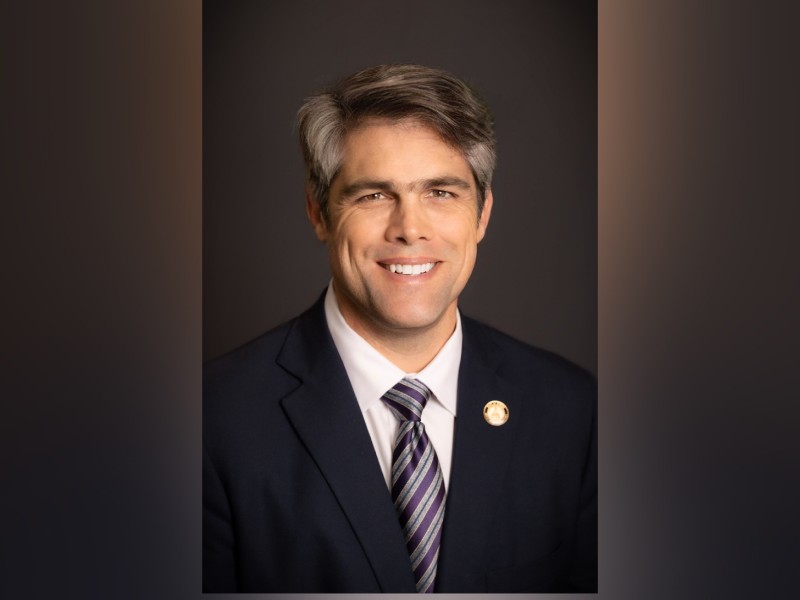
Local attorney Jim Rockefeller owns the
Rockefeller Law Center and is a former Houston Co. Chief Assistant District
Attorney, and a former Miami Prosecutor. Visit www.rockefellerlawcenter.comto submit confidential legal questions,
and to review former articles and Frequently Asked Questions.
HHJ News
Before you go...
Thanks for reading The Houston Home Journal — we hope this article added to your day.
For over 150 years, Houston Home Journal has been the newspaper of record for Perry, Warner Robins and Centerville. We're excited to expand our online news coverage, while maintaining our twice-weekly print newspaper.
If you like what you see, please consider becoming a member of The Houston Home Journal. We're all in this together, working for a better Warner Robins, Perry and Centerville, and we appreciate and need your support.
Please join the readers like you who help make community journalism possible by joining The Houston Home Journal. Thank you.
- Brieanna Smith, Houston Home Journal managing editor