
Where to go for surgery?
Often, distraught patients seek advice on where to go for certain surgical procedures. Physicians have the moral obligation to assuage patients’ fears and apprehension by giving proper directions or appropriate referrals.
A case in point is a 58-year-old patient, otherwise active and healthy, who presented at the doctor’s office a complaint of occasional vague abdominal discomfort. A CT scan, followed by MRI of the abdomen, clearly established the presence of a pancreatic mass, highly suspicious for malignancy. Without further ado, the attending physician suggested immediate surgical consultation. The question was, where? Meanwhile, a group of FOFs (friends of the family) wanted some local physicians to review the patient’s records first. The attending physician advised otherwise out of concern that doing so would result in unnecessary tests that would never contribute to cure but instead would just delay treatment.
I have previously written about pancreatic cancer in this column. The statistics on this disease have remained dismal; pancreatic cancer is the fourth leading cause of cancer death in this country and the incidence continues to rise, currently about 34,000 new cases a year. The exact etiology still has not been clearly defined and its prognosis remains grim.
The surgery for localized pancreatic cancer is well known as “Whipple’s Procedure,” named after a famous surgeon, Allen Whipple, who initially described it in the early 1900. This procedure is considered one of the most technically demanding and challenging in general surgery because of the pancreas’ unique anatomical location, close to numerous vital structures in the middle of the abdomen. The immediate and long-term success of the operation greatly hinges on the surgeon’s technical skill and sound surgical decision-making process.
Since pancreatic cancer management, in general, has become a very complex process; pancreatic surgery has evolved into a ‘specialized field’ within general surgery. This development resulted in some surgical trainees (residents) not receiving adequate experience in managing these problems. Consequently, it is not unusual to run into “well trained” general surgeons who never even assisted, much less performed, a Whipple procedure. On the other hand, there are general surgeons who can perform this backbreaking procedure not only laparoscopically but also “robotically.”
This helps me convey the intended message! The March issue of the ACS Surgery News – the official newspaper of the American College of Surgeons – reported that at the last meeting of the Americas Hepato-Pancreato-Biliary Association (those who deal with pancreatic surgery), incontrovertible data was presented showing that it is the volume of experience of the operating surgeons that make a difference in the success of this complex procedure. “Surgeons who performed the highest number of pancreaticoduodenectomies (Whipple’s) had the best outcomes.”
Traditionally, most of these surgeons in this specialized field are found in well-known institution in this country. However, the same study showed that if these “high volume surgeons” moved to lesser-known hospitals, they still produce the same results leading to the conclusion that good results of this complex procedure are due to “who does the surgery rather than where it is undertaken.”
As a footnote, the high volume performing hospitals where the busiest surgeons are located, also “got the best results.” Best results equate to less morbidity and mortality, less hospital stay, less complications and less readmission rates. Overall, the healthcare cost is also much less!
Reference: ACS Surgery News. Vol. 10. No.3. March 2014
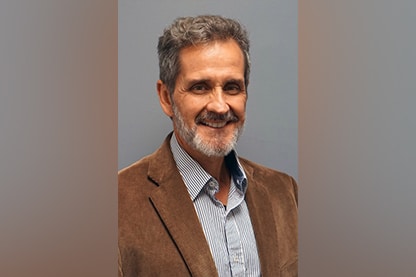
Dr. Cabasares is a board certified general surgeon and Fellow of the American College of Surgeons; he practices in Perry.
HHJ News
Before you go...
Thanks for reading The Houston Home Journal — we hope this article added to your day.
For over 150 years, Houston Home Journal has been the newspaper of record for Perry, Warner Robins and Centerville. We're excited to expand our online news coverage, while maintaining our twice-weekly print newspaper.
If you like what you see, please consider becoming a member of The Houston Home Journal. We're all in this together, working for a better Warner Robins, Perry and Centerville, and we appreciate and need your support.
Please join the readers like you who help make community journalism possible by joining The Houston Home Journal. Thank you.
- Brieanna Smith, Houston Home Journal managing editor
Paid Posts
Related Articles

Jesus called Himself ‘Son of Man,’ not ‘Son of God’
The Christian faith teaches that Jesus is the “Son of God,” yet Jesus frequently and consistently called Himself the “Son of Man” — a total of 81 times in scripture.

If you give a coworker a donut
If you give a mouse a cookie…
Fat and clumsy livers
The liver is responsible for over 500 crucial functions, so this is serious!